Carlos Grows It. We Roast It. RISE Gets It to Your Door. The Story of Hermosa

By Ben & Alice, Co-founders of RISE Coffee Box (the UK’s best coffee subscription)
There's a moment we keep coming back to when we talk about this coffee.
We're sitting at a kitchen table in Santa María de Dota, in the heart of Costa Rica's Tarrazú region, at the end of a long day on the farm. Our seven-month-old son is asleep in the corner. Carlos, the farmer whose family had opened their home to us for three days, is talking about climate change. Not in the abstract, policy-document way the coffee industry sometimes does. In the specific, urgent, this-is-my-land-and-I-am-worried-about-it way that only someone who has farmed the same hillside for years really can.
That conversation is a big part of why, when we eventually put Hermosa in the RISE Coffee Box, it felt like so much more than just picking a coffee.
Why We Go to Origin
RISE Coffee Box exists to connect specialty coffee lovers across the UK with the best independent roasters and the most extraordinary coffees we can find. We're proud to be considered one of the best coffee subscriptions in the UK for discovering new roasters, but that only means something if every coffee in the box has been genuinely sought out, tasted, understood, and believed in.
That's why we travel to a new origin every year.
In January 2025, Alice and I packed up our then seven-month-old son and flew to Costa Rica on a sourcing trip. Simple in theory, exhausting in practice! We visited farms, met with farmers, tasted as many coffees as we could, and came home with a much clearer sense of what we wanted to put in front of our subscribers.
We use these trips to learn as much as we can about coffee farming, about the challenges farmers face, about the parts of the supply chain that never make it onto a bag. What we didn't expect was quite how much three days in Santa María de Dota would stay with us. Or that the coffee we tasted on that trip would find its way back to us months later, through a chance conversation at an industry event with the team at Mission Coffee Works.
But we're getting ahead of ourselves.
RISE coffee arriving in Tarrazú
The Tarrazú region sits in Costa Rica's central highlands, south of San José, at altitudes between 1,500 and 1,800 metres above sea level. If you've never been, it's hard to do it justice. The hills fold into each other endlessly, covered in shade trees with coffee plants growing in careful rows beneath them.
We'd read about Tarrazú plenty before we went. We knew it was one of the most celebrated coffee-growing regions in the world, home to Coope Dota, the pioneering cooperative that became the world's first carbon-neutral coffee processor. We knew Costa Rica had banned Robusta cultivation back in 1989, making every coffee grown there 100% Arabica. We knew the altitude, the volcanic soil and the microclimate would be pretty special.
Knowing it and actually standing in it are completely different things. It’s an amazing experience to arrive somewhere new and realise the reality is even better than you'd read about.
Three Days with Carlos and His Family
Carlos is one of nearly 1,100 coffee producers who supply Coope Dota, the cooperative founded in 1960 by just 96 farmers that now sits at the centre of Tarrazú's coffee industry, as well as selling directly to roasters like Mission. He welcomed us, all three of us, baby included, into his home for three days, and honestly it was one of the most formative experiences either of us has had in coffee.

We walked the farm in the early mornings while our son slept in a carrier on Alice's chest and the mist was still clearing in the valley below. Carlos showed us his shade trees, not just coffee plants but a whole layered canopy of different species above them, deliberately planted to regulate temperature, protect the soil, and create the kind of biodiversity that makes a farm genuinely resilient rather than just productive. He talked about shade-grown coffee not as a marketing term but as a practical, necessary response to what he's actually dealing with on the ground.
And then he talked about climate change.
This is the conversation that has really stayed with us. Carlos described how the rains are less predictable than they were when he started farming, arriving later, lasting longer, disrupting the rhythms that generations of Tarrazú farmers have built their whole seasons around. He talked about the regenerative farming practices he's adopted, not because they're fashionable, but because he can see on his own land that the old ways are becoming less viable. He was calm and matter-of-fact about it, not dramatic, which somehow made it hit harder. We could see with our own eyes where landslides had torn through parts of the farm, a stark physical reminder of what climate change actually looks like when you're living with it rather than reading about it.
Sitting at his kitchen table that evening, with our son asleep in the next room and the hillside dark outside, we talked about what the next twenty years might look like for a farmer in his position.
The Coffee
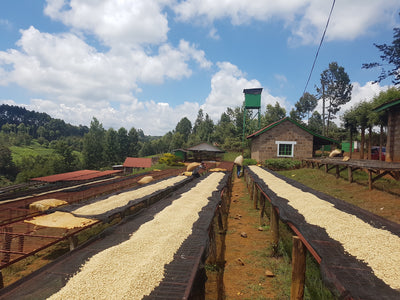
Hermosa is a washed-process coffee produced by Coope Dota's network of farmers, including Carlos, grown at 1,500 to 1,800 metres above sea level.

Washed processing removes the fruit from the cherry before drying, which gives you a cleaner, clearer cup where the origin really comes through. The tasting notes are chocolate mocha, pear, and cashew, and when we cupped it fresh in Costa Rica, it was immediately obvious this was something special. There's something genuinely humbling about tasting a coffee in the place it was grown. The freshness, the clarity, the way the flavours just sit there without being forced, it sets a standard. It also makes you acutely aware of how quickly that quality can get lost in a long, slow supply chain.
We came home with Hermosa very much on our minds. The coffee was exceptional, but so was everything behind it. Coope Dota's sixty-five year commitment to community and sustainability, Carlos's thoughtful approach to farming in a changing climate. It was exactly the kind of origin story we want to tell our subscribers. We just needed the right roaster to bring it to the UK.
The Mission Connection
A few months after getting back from Costa Rica, we were at an industry event and got chatting to the team at Mission Coffee Works. When they mentioned they'd just imported Hermosa from Tarrazú, Alice and I just looked at each other and laughed. We'd just been there. It was one of those moments where everything just clicks and we knew immediately we had to get Mission into the RISE box.
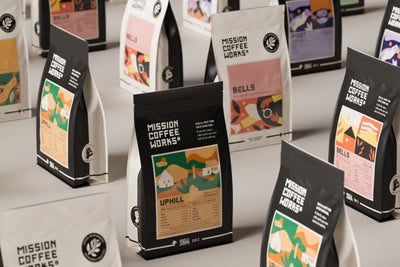
Mission Coffee Works have been roasting since 2012, starting in Clapton, Hackney but has recently moved to a larger roastery in Hackney Wick right in the heart of London's specialty coffee scene. Current owner Jaanus Uksik, who brilliantly started out brewing from a street van in Peckham, bought the roastery in 2018 and has built it into something with a really clear sense of purpose: meaningful sourcing relationships, genuine support for farmers through fairer prices and better infrastructure, and a real commitment to keeping the supply chain as short and transparent as possible.
That matched exactly what we'd experienced in Santa María. Mission Coffee Works weren't just importing from a well-known region. They understood the cooperative behind it, the farmers producing it, and the values running through the whole supply chain. It was super important to us to get this coffee in the box.
From Carlos's Farm to Thousands of RISE Boxes
When Hermosa landed with our subscribers, we were so excited to hear what our customers thought! Throughout the month thousands of customers tasted the coffee and many let us know it was one of their faves! Knowing we’d come full circle was a lovely feeling.
RISE Coffee Box is a UK specialty coffee subscription delivering carefully curated coffees from the best independent roasters every month. Find out more at risecoffeebox.co.uk




Leave a comment